
Goat shelters and run-ins, built to hold up
A goat shelter should give about 15 to 20 square feet of covered space per adult goat, in a three-sided run-in that keeps them dry and out of the wind while staying well ventilated. It doesn't need a raised floor, but it does need to stay dry, so it sits on high, well-drained ground with the open side facing away from NJ's winter winds. Triano Farms builds these on-site across New Jersey, and a 6x8 run-in starts around $3,995.
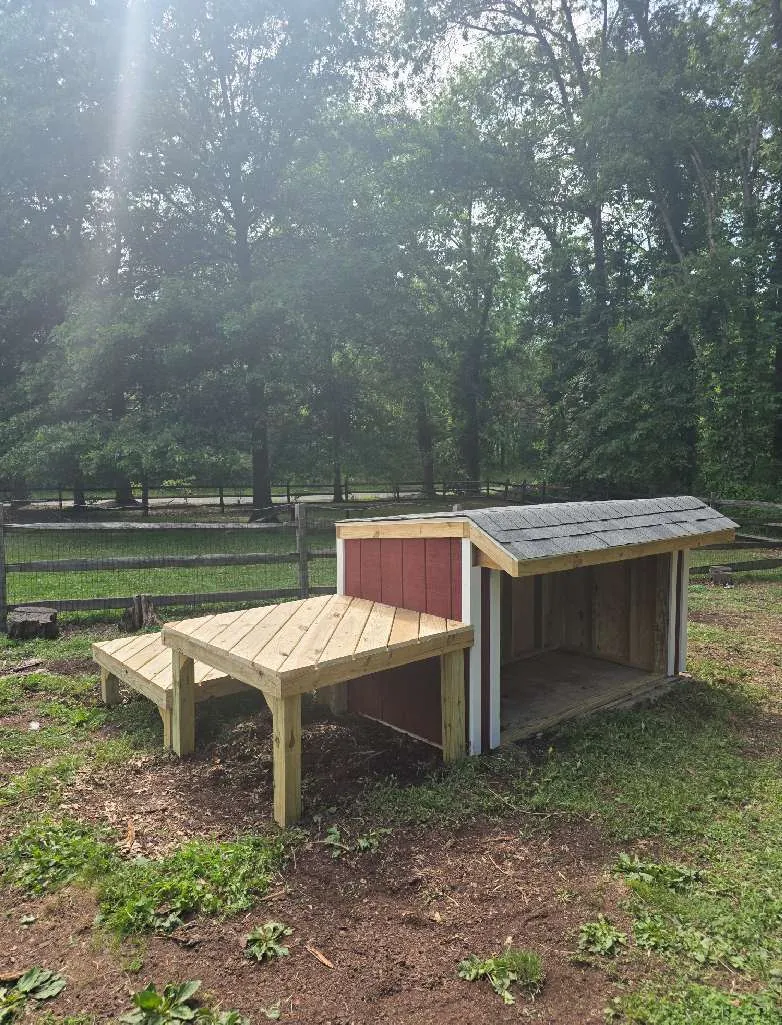
Shelter that stands up to livestock
Goats are hard on housing. They climb it, rub it, and test every weak spot. A dry, draft-free place to get out of the weather is the difference between healthy animals and vet bills. We build open-front run-ins and enclosures with real lumber and heavy hardware, on-site, so they fit your paddock and last through NJ winters and summers alike.
- 15–20 sq ft of covered space per adult goat
- Three-sided run-in for shelter, shade, and easy access
- Sited on high, well-drained ground and faced away from winter wind
- Compacted stone, gravel, or well-drained base (dry without a raised floor)
- Woven-wire fencing, gates, and covered runs to match
What we build for livestock
Beyond goats, we design and build custom livestock enclosures across New Jersey for sheep, rabbits, chickens, and other small livestock: run-in shelters, enclosed livestock areas, fencing, gates, covered runs, and other custom structures sized to the animals you keep and the layout of your property. It can all be customized: different shelter sizes, gates, partitions, feeders, hay storage, roofing, siding, and access points.
Building out more than one structure? Bundle it all with a Homestead Package, or see our rabbit hutches.
Goat & livestock shelter questions
How big should a goat shelter be?
A good rule of thumb is about 15 to 20 square feet of covered shelter per adult goat. If they'll spend a lot of time inside, or you want room for feeders, kidding, or bad-weather confinement, lean closer to 20 to 25 square feet per goat. A 6x8 run-in works well for 2 to 3 goats; an 8x10 or 8x12 gives more room for a larger group.
What is the best type of shelter for goats?
A three-sided run-in, or open-front livestock shelter, that keeps them dry and protected from wind while still providing plenty of ventilation. Goats handle cold far better than they handle being wet and exposed, so the priority is a dry, draft-free spot they can walk into and out of freely.
Should a goat shelter have a floor?
It doesn't have to have a raised floor, but it does need to stay dry. A compacted stone, gravel, or well-drained dirt base works well for a run-in. The key is drainage: the shelter should sit on high ground so rainwater flows away from it instead of collecting inside.
Which direction should a livestock run-in face?
Generally face the opening away from the prevailing winter winds so the animals are protected from cold drafts, rain, and blowing snow. In New Jersey those winds usually come from the west or northwest, so an opening facing south or southeast is a good starting point. That also catches better winter sun and helps keep the shelter warmer and drier.
Can goats stay outside during a NJ winter?
Yes. Goats handle cold temperatures fairly well, but they do not tolerate being wet and exposed to wind. As long as their shelter protects them from rain, snow, and prevailing winds while still allowing good ventilation, they're fine outside through a New Jersey winter. They do not need a fully enclosed, heated barn.
How much does a livestock shelter cost?
A 6x8 livestock run-in starts around $3,995. Final price depends on size, siding, roofing, and any extras like feeders, hay storage, gates, or partitions. We build to your herd and your property, so the quote is exact.
What fencing is best for goats and small livestock?
Woven wire, or no-climb livestock fencing, is usually one of the best options. It's strong and durable, and its openings are sized to keep goats from getting their heads or legs caught the way they can with larger-opening fencing. We can build fencing, gates, and covered runs alongside the shelter.
Ready to keep your flock safe?
Tell us about your animals and your land. We'll design a coop built to last, on-site, just for you.